
Gold School · Episode 1
What moves gold? The five things, explained
The dollar, interest rates, inflation, fear and the big buyers. No jargon. 6 min 30.
The video plays from YouTube when you tap it. Open on YouTube · Our channel
In this lesson
Tap a part to jump to it.
The words
Rather read? Here is the lesson in words.
0:00 Why gold moves at all
In February, gold went above five thousand dollars an ounce for the first time ever.
By the end of October, it had lost more than a fifth of that, and hit its lowest point in a year.
Then, in a single week in November, it jumped about five percent.
Same metal. Same mines. Nothing about the gold itself changed.
So what actually moves the price of gold? It comes down to a handful of forces. Once you know them, the headlines start to make sense.
Let's take them one at a time.
0:32 The dollar see-saw
Force number one is the US dollar.
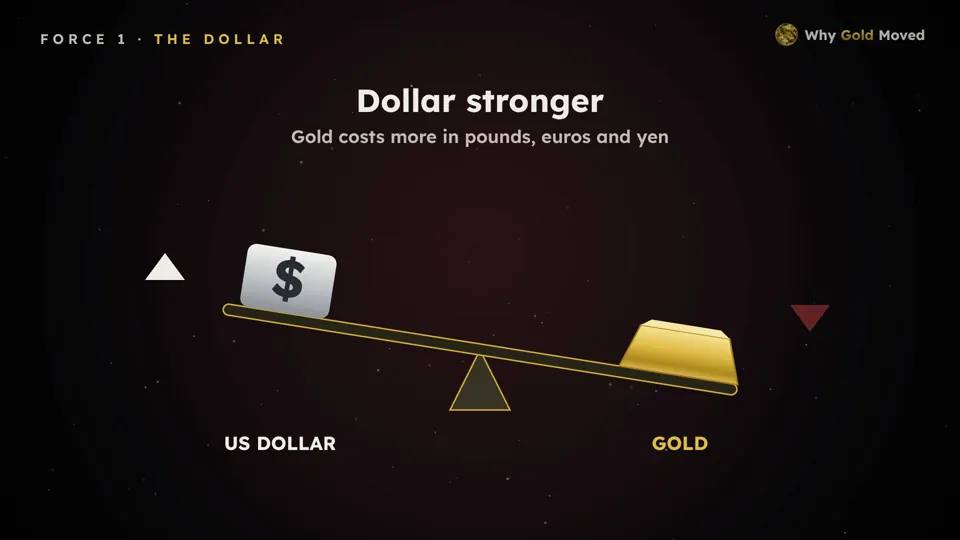
Almost everywhere in the world, gold is priced in dollars. A bank in London, a jeweller in Mumbai, a buyer in Tokyo: they all start from the dollar price.
So think of it as a see-saw. When the dollar gets stronger, an ounce of gold costs more for anyone paying in pounds, euros or yen. Some of them buy a little less, and the price often slips.
When the dollar gets weaker, the opposite happens. Gold gets cheaper for the rest of the world, buyers come back, and the price tends to rise.
You saw this on the fourth of November 2026. After the US midterm elections, the dollar fell to a one-month low. That same day, gold had its best day since August, up more than three percent.
One word of warning. This is a rule of thumb, not a law. On days when the whole world is frightened, the dollar and gold can both rise together, because people want both. We'll come back to fear later.
1:33 Interest rates
Force number two is interest rates. And it starts with one simple fact: gold pays you nothing.
Put money in a savings account or a government bond, and it earns interest. Hold a gold bar, and it just sits there.
So when interest rates go up, cash and bonds pay more, and holding gold starts to feel expensive. Some money moves away from it. When rates come down, that cost shrinks, and gold looks more attractive.
In the US, rates are set by the Federal Reserve, usually just called the Fed. And here's the part most people miss: markets care less about what the Fed just did, and more about what it might do next.
Right now, markets expect the Fed's next move to be a rise. So news that makes a rise more likely usually weighs on gold. News that makes it less likely usually helps.
That's why the surprise matters more than the number. On Friday the sixth of November, the US jobs report showed one hundred and sixty-five thousand new jobs. Forecasters expected about sixty-five thousand.
A much stronger jobs market gives the Fed more reason to raise rates. Within nine minutes, gold fell twenty-seven dollars.
2:43 Inflation day
Force number three is inflation: how fast the prices of everyday things are rising.
You've probably heard that gold protects you from inflation. Over many years, there's some truth in that. Since the year 2000, gold has gone from under three hundred dollars an ounce to over four thousand.
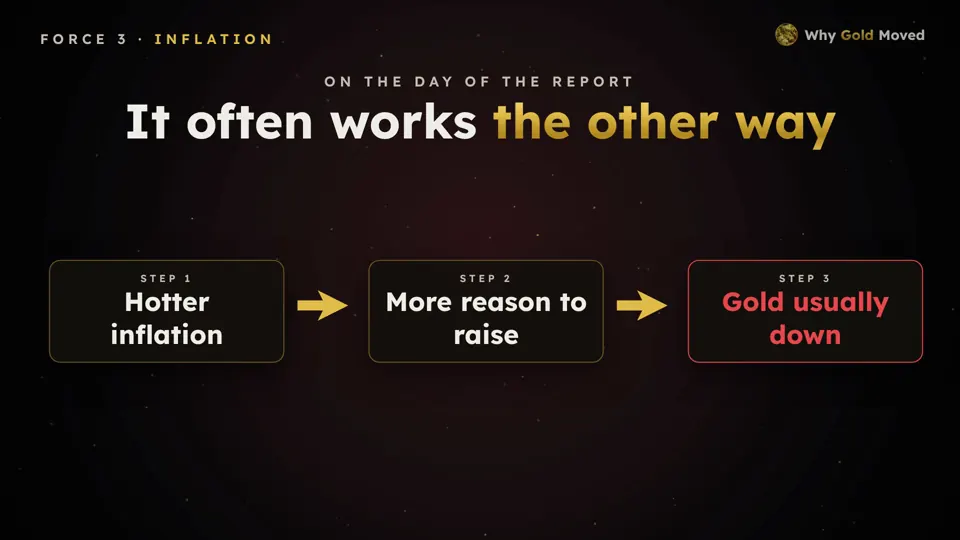
But on the day an inflation number comes out, it often works the other way.
Hotter inflation gives the Fed more reason to raise rates. And as we just saw, higher rates make gold, which pays nothing, look less attractive.
On the fourteenth of October 2026, US prices were up 3.7 percent on a year earlier. Forecasters expected 3.6. A tiny miss. Gold dropped about sixty dollars within half an hour.
So here's the way to hold both ideas at once: over years, rising prices can help gold. On the day of the report, a hot number usually hurts it.
3:40 Fear, war and oil
Force number four is fear. Gold has been a safe place to hold value for thousands of years. When people get scared, some of them buy it. That's what safe haven means.
But a safe haven isn't a guarantee. In March 2020, as Covid hit, gold fell more than ten percent in under three weeks. People were selling whatever they could to raise cash, gold included.
Five months later, it hit a record above two thousand dollars an ounce.
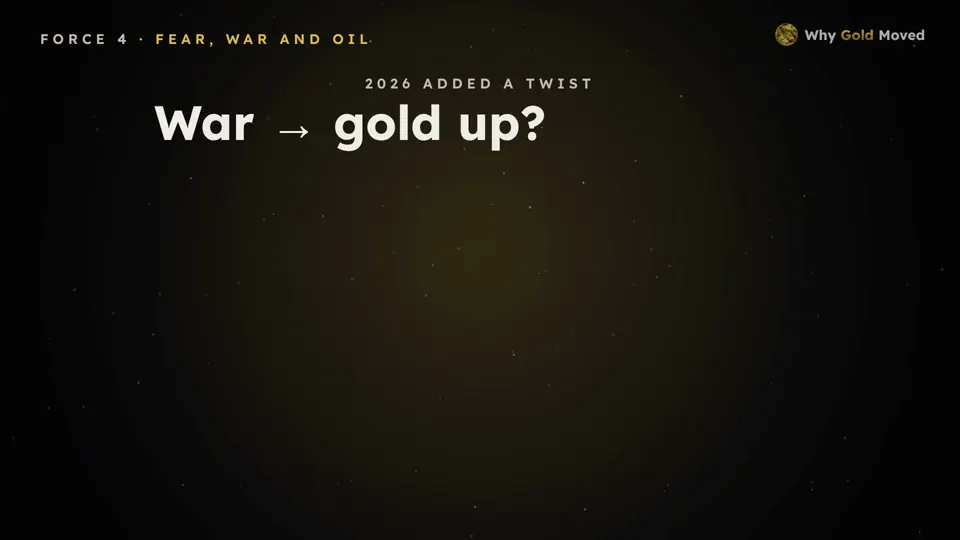
And 2026 added a twist. You might expect war in the Gulf to send gold straight up. Often it didn't.
Attacks near the Strait of Hormuz pushed oil prices up. Dearer oil makes almost everything dearer, which gives the Fed more reason to raise rates. And that, as we know, weighs on gold.
Then, on the fourth of November, oil fell eight or nine percent in a day as fears of new strikes eased. Gold rose.
So when you see a scary headline, don't stop at war means gold up. Ask what it does to oil, the dollar and interest rates. That's usually where the answer is.
4:45 The big buyers
Force number five is simple: who's buying, and how much.
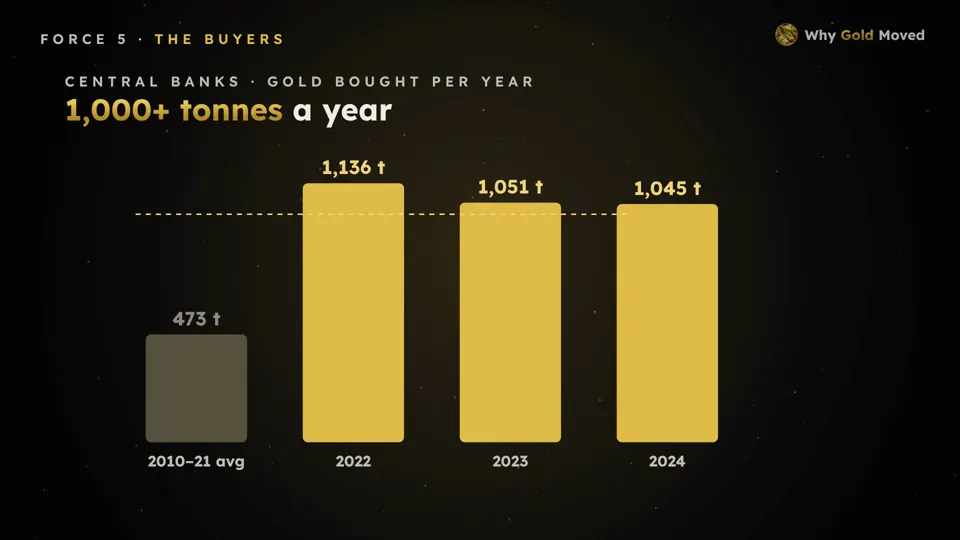
First, central banks. In 2022, 2023 and 2024, central banks around the world bought more than a thousand tonnes of gold each year. That's the fastest pace in decades. Many want to hold less of their savings in US dollars.
Then there's India and China, the world's biggest buyers of gold jewellery and small bars. Demand there rises around weddings and festivals, like Diwali and Lunar New Year.
But price matters to them too. When gold gets very expensive, some families wait, and buying slows.
And finally, investors, buying through gold funds. When money pours into those funds, it can lift the price. When it flows out, the price can sag.
5:35 The checklist
So that's the five: the dollar, interest rates, inflation, fear and oil, and who's buying.
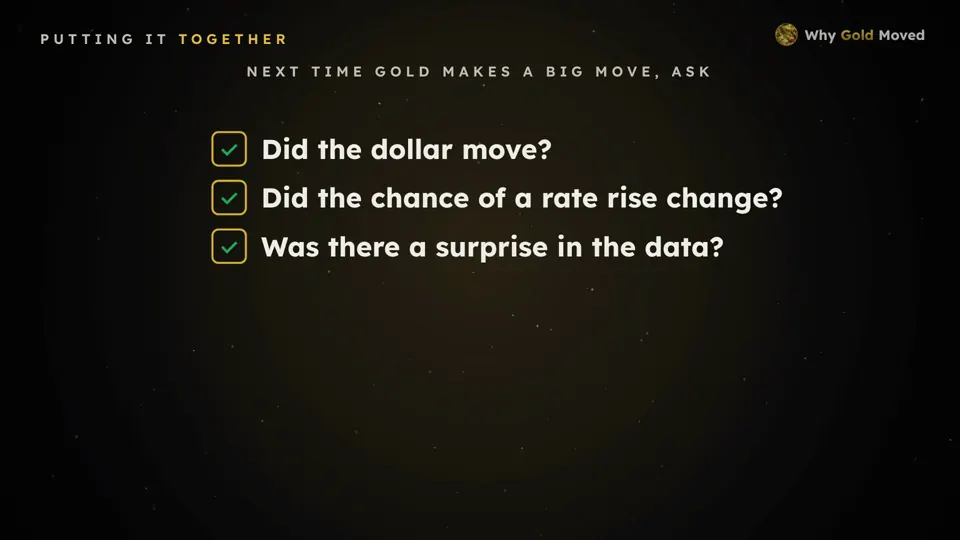
Next time gold makes a big move, run through them like a checklist. Did the dollar move? Did the chance of a rate rise change? Was there a surprise in the data? Did fear, or the oil price, shift? Most of the time, the answer is in there.
And remember: these forces often pull in different directions on the same day. Gold doesn't always react the same way. That's exactly why it's worth understanding the why.
Education only. Gold doesn't always react the same way. Not financial advice.
Keep going
Read each idea as a short lesson.
- 1What moves the price of gold?▶ 6-minute video + 2 min read · The five big drivers, in one page. Start here.
- 2Why does a weaker dollar help gold?▶ 1-minute video + 2 min read · The dollar see-saw, and why euro and pound news matters too.
- 3Why does gold fall when interest rates rise?▶ 1-minute video + 2 min read · Why gold and interest rates usually move in opposite directions.
- 4Does CPI affect gold?▶ 1-minute video + 2 min read · US inflation data, and why cooler numbers usually help gold.
Free · no sign-up
Keep up with the news that moves gold most
A reminder before every big release, then why gold moved, in plain English, the moment the news lands.
- 📅 Reminders in your time zone
- 🟢 🔴 Good or bad for gold
- 💬 The why, in one line
Free gold news on Telegram.